Uncertainty Overrides Our Common Sense
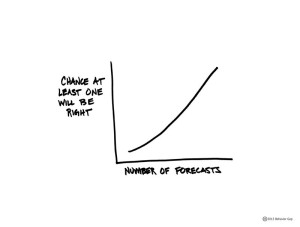
Behavioral Finance, Financial PlanningThe desire we have for certainty and to make order out of chaos causes us to overlook the reality that life is uncertain. I understand why we do it. The uncertainty is scary, but it’s impossible to get forecasts about the future 100 percent right. What happens when we […]
Uncertainty Overrides Our Common Sense Read Post »
The Market, Greece and Big Picture Thinking
Authored by Jeff, Behavioral Finance, Markets, Travel
I used to make market comments quite frequently, but I don’t so much these days. It’s not that I no longer have an interest; I do still find the markets quite fascinating. It’s more that I’ve come to the conclusion that it makes no difference what I think: The markets will do what they do despite my opinion.
But when we’re faced with the rare situation when it looks like small minds are beginning to rule the day, I can’t resist stepping in to try to come to the rescue of those of us who wish to think bigger… globally… and long-term.
So first, let’s talk about the market facts: Yep, we’ve had a couple of lousy weeks in the market. So lousy in fact that the stock market (S&P 500 Index) is now basically unchanged from Thanksgiving of 2014. It’s so boring that the 3 month, 6 month and year-to-date returns are almost not measurable, leaving us with a less than a 1% total return overall since last fall.
What does this mean? Nothing. It’s a flat spot, which is a typical thing in the market from time to time. Sometimes we can get into these ruts for an extended period of time. Most likely, we’re just working off past excesses: The stock market gets a little ahead of itself from time to time and now it is taking a necessary breather. (Yawn here.)
The silver lining here is that a wicked sell off is also a great way to work off excess market valuations. Believe me, flat spots (consolidations) are a much easier way to digest past gains, unless you’re afraid of being bored to death.
The bottom line is that even with the past few weeks selloff, the current long-term uptrend is still intact. We’re still invested in equities in a meaningful way. If it changes in the future, we’ll step away from the stock market before bad turns to worse… and probably write about that too.
Second, let’s talk about Greece: Oh my. What a great story for the news channels. Although the story makes for great press, everyone has known for about 5 years that Greece is in trouble. If the market’s don’t like surprises and this is no surprise, then it’s no wonder that we haven’t seen much, if any market movement due to the newest leg of this crisis.
As I write this, it’s projected that Greek voters have voted “no” on furthering the bailout terms. It’s hard to say how the market will react, if at all. Greece is about 2% of the Eurozone and their GDP is about the same as Connecticut’s.
Although there won’t be a significant actual financial fallout, there could be some emotional, ‘what-if’ reaction. It could inject some volatility into financial markets in the coming weeks. If it’s enough to change the long-term trend of the US stock markets, we’ll adjust. Otherwise, we’ll take the media’s squawking with our usual grain of salt.
If you want to take action on the Greek crisis, I suggest that you take a European vacation. Everything that is Euro-based is cheaper. Stay in a nicer hotel in Munich or dine at a nicer restaurant in Paris. (Maybe stay away from Greece itself right now unless you have plenty of cash on hand, since the ATMs are only giving up about 60 Euros a day.)
And lastly, here are a couple of paragraphs from a recent interview with Aby Rosen (New York real estate tycoon):
More than 5 Billion was spent by rich Chinese investors on New York property between early 2013 and December 2014 – up from less than 300 million in 2012 – according to the Wall Street Journal. There are so many billionaires created in China on a monthly basis who are smart enough to know that taking money out of China is already profit in itself.
There are hundreds and hundreds, thousands and thousands of foreign investors wanting to spend their money in the U.S. There’s been a flight from South America, from Russians who want to take their money out of the country -the rouble’s collapse didn’t help lately but there is still enough money. There are Indians, Malaysians and Old Europeans, including Jews leaving France. Qatar is coming, Abu Dhabi is coming, Egyptians, people who made money in Africa. Lots of wealthy independent people are looking at America for second or third homes – and the US is far more welcoming now to foreigners than it ever has been.
Commerce is in. If real estate is booming, art is booming. If you have a great apartment, you need great art. The worlds of architecture, art and fashion are all melting together into one happy family. There’s so much money out there and people want to have a good time. What else are they going to do with their cash?
And of course, it’s not just real estate and art. The kinds of demographic moves Mr. Rosen is seeing will affect everything and everyone. Even you.
Jeff
The Market, Greece and Big Picture Thinking Read Post »
4 Ways You’re Sabotaging Your Retirement in Your 30s
Behavioral Finance, Financial Planning, Markets, Retirement
These four mistakes could cause big problems when you get closer to retirement age. – Matthew Frankel, Selena Maranjian, Dan Caplinger, and Jason Hall – Investment planning
Source: 4 Ways You’re Sabotaging Your Retirement in Your 30s
4 Ways You’re Sabotaging Your Retirement in Your 30s Read Post »
Why It Doesn’t Matter What I Think About The Market
Authored by Jeff, Behavioral Finance, Markets
Should we have an opinion about the stock market, or even about the direction of the economy? Is it important to set a firm course of action based upon our expectations of what we think will occur in the coming months?
Most readers when asked, would think these questions a bit silly. Everyone “knows” that you must have an opinion to be a successful investor.
Or do you? Given the nature of how a publicly traded market truly functions, it’s quite possible that having a preconceived notion about it’s future direction could be more hindrance than help.
I consistently see evidence that the investors who
have a firm opinion about what they believe will occur in the future are taking a risk with their flexibility. They’re messing with an essential investing skill that is the ability to change and adapt to a very fluid and dynamic situation.
Once a money manager or other professional makes a public declaration about an expected market direction, it becomes increasingly difficult for them to abandon their position should the market begin to prove them wrong. Ultimately, this can lead to their own pride or hubris costing them and those they advise significant sums of money.
Even the “experts” are wrong most of the time. In a classic case of “couldn’t be MORE wrong”, late in the year in 2007, in an annual Barron’s survey, 12 prominent strategists were questioned about what they thought would be the course of the economy and the market for 2008.
First, not a single one of them predicted a recession even though we were already in a recession at the time of the survey (December 2007). Second, their ending estimates for the S&P 500 were between 1525 and 1750. The S&P 500 closed 2008 at 903.25. That’s an embarrassingly huge miss!
Of course, it would be a bigger shame if they managed or advised others based upon an unflinching adherence to their predictions. That’s a portfolio-wrecking miscalculation and strategy. And this isn’t just one “strategist”… it’s all of them.
It’s foolish, dangerous and most likely quite expensive to try to predict the stock market in any economic scenario. Of course, this doesn’t stop the pundits or the headline-seekers from attempting it. They must be doing it for the pure publicity… good or bad, it doesn’t seem to matter.
But for me, this is why it doesn’t matter what I think about the future. The good news is that when I’m stacked up against some of the greatest economists in the world, I figure I’ve got about the same odds as them as being right. The bad news is that those odds are somewhere between slim and none.
What to do?
I think that it is more important to imagine a number of potential scenarios and their corresponding courses of action. From this brainstorming session, you can develop a written plan for the future of your investments in a sequence of decision statements.
I’ve tried to do this with our investment portfolios. We have “rules” that we follow that indicate to us when to be in a market and when to be out of a market. We don’t guarantee results or performance, but we place an emphasis on putting in place the decision trees to try to avoid the large long-term losses that come along a few times during an investor’s life cycle that can wreck or alter a financial plan entirely.
Once these rules are in place, then truly does not matter what I, you or anyone else thinks about the market. If it’s good, we’re in. If not, we’re not. Very low stress.
Why It Doesn’t Matter What I Think About The Market Read Post »
How to Retire Early
Authored by Jeff, Behavioral Finance, Lifestyle, Retirement
When I work with people about their finances, it usually ends up not being about JUST finances. There’s so much emotion wrapped up in how we view money that we end up working on an assortment of financial, emotional and behavioral issues.
Together with our clients, we are on a quest to find a combination of working / saving / spending attitudes that allow folks to not only work toward being able to retire before they need to, but also (and this is a biggie) to be able to live a happy, healthy and fulfilling life along the way.
We encourage everyone to consider building a strategy that will allow them to retire early. Although many clients are perfectly happy in their professions, (some even wishing to work well into their 70s) we still encourage building an early retirement strategy for two main reasons:
One, having built a plan to reduce or eliminate your financial dependence on your paycheck can actually increase enjoyment. I like to call it the “Johnny Paycheck Effect”. For many, being able to tell the world (or your boss), “You Can Take This Job and Shove It” can actually make it easier to enjoy your career. It can cleanse your emotional palate, lessen the chance for burnout and allow you to view your daily routine as more pure. Helping others, volunteering, achieving objectives, building something of lasting value etc. are all pursuits typically more fulfilling than the purely selfish pursuit of a paycheck. Thank you Johnny Paycheck.
The second major reason is the unpredictability of life itself. It’s possible that despite your best-laid plans, life just won’t allow you to execute them as you’d desired. A health crisis or injury to either you or a spouse can wreak havoc on even the most thoroughly planned strategy. By having an “early retirement” plan in place, you can use it as an escape hatch to a life that you could not have imagined years earlier. Maybe you won’t ever need it, but having the plan in place can make your life between now and then significantly happier and less stressful.
Everyone will need to design an early retirement plan that suits their particular situation. Both now and in an anticipated future. It’s not always about building a specific nest egg amount to insure a happy early retirement. Many early retirement plans we’ve constructed with clients involve some low-impact consulting income for a couple of years after full retirement, or a part time job in a completely unrelated field to help with the transition, or even a complete lifestyle transition to make it possible. Most importantly, it helps to think out of the box by reminding yourself that it’s not always about the money.
According to newly released data from Allianz Life’s 2014 LoveFamilyMoney study, there are six major traits that people who’ve fully developed and implemented early retirement plans have in common… and some of these traits may surprise you. Happily for most clients, coming from a life of privilege is not among them.
Have a happy marriage. Early retirees tended to describe themselves as in sync with their spouse. Some 76 percent of these people were married, compared to 68 percent of the people who never planned to retire, and they were also more likely to be in their first marriage. And 90 percent of early retirees found it at least somewhat easy to talk about money with a spouse or significant other, well above the 77 percent of people planning to never retire.
Appreciate what you have. People planning to retire early were significantly more likely to describe themselves as wealthy or financially comfortable, but that can depend on your perspective too. I’ve worked with a number of clients who struggle with drawing the distinction between being appreciative for what they have and complacency. They can be under the assumption that being appreciative of their present situation is akin to giving up or ceasing to strive for further success. Nothing could be further from the truth.
Follow your parents’ example. The would-be early retirers in the Allianz Life survey were more likely to compare their financial situation to their parents’, with 21 percent of them doing so, compared to 14 percent of those not planning to retire. They also tended to emulate their parents’ money behaviors. Of course, for this one to have a positive effect, you need parents who were or are fiscally responsible.
Teach your kids about money. Only 14 percent of people planning to retire early taught their children about money and finances, but that was well above the 6 percent of people not planning to retire who did so. Boomerang kids and supporting adult children can decimate your retirement nest egg. Better to prepare the kiddos from an early age to be self sufficient.
Save the drama for your mama. Having a fairly calm financial life also seems to encourage people to plan early retirement. Some 46 percent of those people said they had not experienced financial hardship as an adult, versus just 31 percent of those planning to stay in the workforce.
Plan for the worst, hope for the best. On the downside, early retirees were more likely than other workers to worry about dying young. Only 47 percent of them worried about running out of money in retirement, but 53 percent worried that they would not live long after they retired. But don’t sweat it, the good news is that leaving the workforce won’t hasten the process.
With some out of the box thinking to help build an agile financial plan, while adopting as many of the above traits as possible, you should be well on your way to an early retirement.

How to Retire Early Read Post »