
Retirement

Americans Aren’t Loving Retirement Like They Used To — Here’s Why

Lifestyle, Retirement

Retirement is a time to shake off years of employment and enjoy life, right? That might be the goal, but many Americans aren’t feeling it. Dwindling satisfactionA 2016 Employee Benefit Research Institute (EBRI) study analyzed retirement satisfaction trends between 1998 and 2012. Respondents who said they were “very satisfied” with their retirements dropped by 11.9 percentage points, those “not at all” satisfied increased by 2.6 percentage points, and the middle-of-the-road “moderately satisfied” response saw a gain of 9.2 percentage points.

Read the entire article: Americans Aren’t Loving Retirement Like They Used To — Here’s Why

Americans Aren’t Loving Retirement Like They Used To — Here’s Why Read Post »

Healthy Lifestyle Important to Retirement Planning

Health & Fitness, Lifestyle, Retirement

Retirement has become an active stage of life—one people have positive ideas about. For example, they aspire to stay socially connected, participate in their communities and remain economically active, according to the 2016 Aegon Retirement Readiness Survey.

Globally, the majority (72%) of people associate positive words with retirement, including “leisure” (46%), “freedom” (41%) and “enjoyment” (31%). People ages 65 and older have more positive associations with retirement than do younger people, ages 18 through 24.

The two most widely held retirement aspirations among respondents are traveling (62%) and spending time with friends and family (57%). Twenty-six percent mention some form of paid work as a retirement aspiration.

Achieving retirement aspirations requires more than saving, investing and planning, however; it also depends on staying in good health, the survey report notes.

Read the entire article: Healthy Lifestyle Important to Retirement Planning

Healthy Lifestyle Important to Retirement Planning Read Post »

Your Money: 3 moves you should make in the 3 years before you retire – Twin Cities

Lifestyle, Retirement

Life’s major milestones — graduations, births, weddings and cross-country moves — all require a certain amount of preparation.Retirement is no different. That’s why we believe it’s important for people to meet with a financial adviser several years before they retire so you can jump right into the retired life once you’re ready.

Read the entire article: Your Money: 3 moves you should make in the 3 years before you retire – Twin Cities

Your Money: 3 moves you should make in the 3 years before you retire – Twin Cities Read Post »

Making the case for the reverse mortgage as a retirement planning option | Financial Post

Financial Planning, Retirement

I may be in the minority, but I think that considering a reverse mortgage can, in certain instances, be a viable financial planning alternative scenario. -Jeff

It’s a problem — home-owning seniors retiring with reduced income but healthy levels of consumer and mortgage debt — that seems to contain its own solution.The solution: consider the house as an asset like the others and use it as a way of managing your financial affairs, a move that could make for a more carefree retirement.

Read the entire article: Making the case for the reverse mortgage as a retirement planning option | Financial Post

Making the case for the reverse mortgage as a retirement planning option | Financial Post Read Post »

5 New Realities of Retirement – US News

Health & Fitness, Lifestyle, Retirement

My experience has been that the happiest and healthiest retirees that I know find ways to stay socially and emotionally engaged in life all around them. For some, working or scheduled volunteering forces them to do this. Worth the read. -Jeff

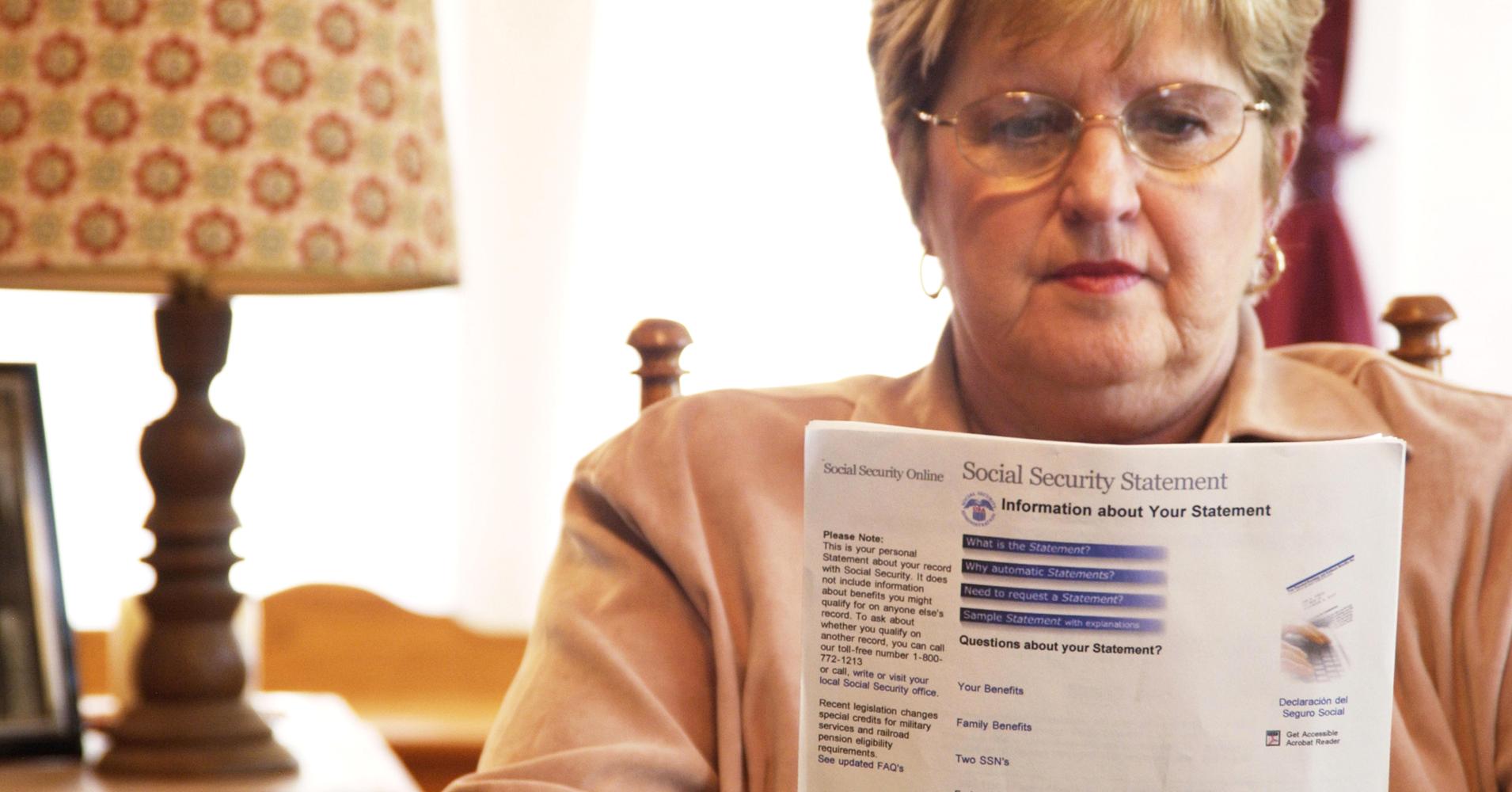
Our parents were able to retire and collect full Social Security at age 65. Most baby boomers have to wait until 66. People born after 1959 have to wait even longer – until age 67 – before reaching what Social Security defines as “full retirement age.” And while the younger generations can still start collecting Social Security as early as 62, they will suffer a bigger penalty – a 30 percent cut to their full benefit, rather than 20 percent for those eligible under the old 65-year-old rule.

Read the entire article: 5 New Realities of Retirement – US News

5 New Realities of Retirement – US News Read Post »

How Much Income Will You Need For Retirement? | KOB.com

Financial Planning, Retirement

Good article and something that reiterates the point that ‘rules of thumb’ are just not appropriate for everyone. -Jeff

The 80% rule is one of the classic rules of thumb for retirement advice. Financial planners often advise that in order to maintain your current lifestyle in retirement, you should aim to replace 80% of your working income from your retirement resources such as Social Security, investment dividends, and IRA withdrawals.

From that point, you gauge the total amount of money that you need based on when you plan to retire, in other words, how many years you are likely to need income?

Read the entire article: How Much Income Will You Need For Retirement? | KOB.com

How Much Income Will You Need For Retirement? | KOB.com Read Post »

3 mistakes to avoid in your first 3 years of retirement – MarketWatch

Financial Planning, Retirement

When you’ve finally arrived at the stoop of retirement, your next steps are often some of the trickiest. So much time and effort goes into reaching this milestone that what you do next is often ignored. Not intentionally, it just happens.

While the day-to-day of the next stage of your life may be unknown, what not to do is actually quite clear: Don’t invest too conservatively, don’t overspend and don’t neglect your health. Seems like common sense,

Read the entire article: 3 mistakes to avoid in your first 3 years of retirement – MarketWatch

3 mistakes to avoid in your first 3 years of retirement – MarketWatch Read Post »

How to Find Previous 401(k) Accounts — The Motley Fool

Financial Planning, Retirement

There are several ways you can try to locate lost retirement money.

Using an employer-sponsored 401(k) plan can be a great way to save for retirement. The downside of 401(k)s, though, is that they are tied to a specific employer. As a result, when you switch jobs, your 401(k) money won’t automatically switch with you. Rather, in many cases, it will stay in your account. Below, we’ll run through

Read the entire article: How to Find Previous 401(k) Accounts — The Motley Fool

How to Find Previous 401(k) Accounts — The Motley Fool Read Post »

The riskiest stock to own? Your employer’s

The riskiest stock to own? Your employer’s

Financial Planning, Retirement

The riskiest stock to own? Your employer’sShortly before Enron collapsed, 62% of employees’ 401(k) assets were invested in Enron. Above, Playboy magazine’s “Women of Enron.” Pension plan consultants, in the wake of a recent Supreme Court case, are telling retirement plan sponsors to reconsider their decision to offer company stock in a 401(k) plan.

You might want to do the very same: Revisit your decision to invest in your company’s stock in your employer-sponsored retirement plan.

Consider: “Defined-contribution plan participants frequently allocate too much of their total retirement portfolio to company stock,” Mark Teborek, a senior consulting analyst with Russell Investments in Chicago, wrote in a recent paper, “Revisiting Company Stock in Defined-contribution Plans.”

In fact, company stock represents on average a whopping 22.5% of defined-contribution assets among plans with more than 5,000 participants, according to the Plan Sponsor Council of America’s 57th Annual Survey, 2014.And that sort of outsize position in company stock might be considered […]

The riskiest stock to own? Your employer’s Read Post »

What retirement crisis? It’s all good

What retirement crisis? It’s all good

Retirement

What retirement crisis? It’s all goodAlmost 70% of women said spending time with their grandchildren was a top retirement goal. Worried about your lack of retirement savings? Take solace from this: A majority of those who are already in retirement say it’s not as financially stressful as you may think, according to a new survey.

Fully 79% of retirees at all income levels said it’s easier than they thought to manage their savings in retirement and to “adapt their lifestyle based on their finances, if necessary,” according to a new survey of 12,000 preretirees and retirees aged 55 to 80, at all income levels (all are participants in a defined-contribution plan), conducted by Greenwald & Associates Inc. for Fidelity Investments, in collaboration with the Stanford Center on Longevity.

That’s not all. A whopping 85% of the retirees surveyed said retirement has been the most rewarding time of their lives — and that sentiment held up […]

What retirement crisis? It’s all good Read Post »

Average Americans May Never Retire, But That's Okay

Average Americans May Never Retire, But That’s Okay

Lifestyle, Retirement

Average Americans May Never Retire, But That\'s OkayMost people don’t set out to be average but at some point a new study or poll may lump them into that category. Unfortunately, for those classified as “average,” it is becoming increasingly difficult to feel secure about their potential to ever retire in the traditional sense.

Recently the Social Security Administration disclosed that the average American took home roughly $44,500 in net compensation. While that’s a 3.5% increase from 2013, when combined with other American averages, such as having less than $60,000 saved for retirement and predictions of spending upwards of $245,000 on healthcare during retirement, it’s easy to see why people are leery about reaching their golden years.

Some quick calculations confirm what many people are worried about. Using the Social Security Administration’s Quick Calculator Tool, the average American baby boomer age 62 and claiming benefits in 2015 would receive approximately $982 per month (less than $12,000 per year). […]

Average Americans May Never Retire, But That’s Okay Read Post »

Opinion: 7 ways to catch up if you’re behind on retirement savings

Opinion: 7 ways to catch up if you’re behind on retirement savings

Financial Planning, Retirement

Opinion: 7 ways to catch up if you’re behind on retirement savingsMost financial advisers agree: The simplest way to ensure you retire comfortably is to start saving early and let the power of compound interest work for you over time.

But what happens if you’re getting a late start on retirement, or financial troubles in middle age ate into your nest egg and now you’re playing catch-up?

The hard reality is that the vast majority of Americans get a late start on retirement planning. Consider a 2011 study from the Schwartz Center for Economic Policy Analysis at The New School, which found a staggering 68% of Americans age 25-64 weren’t even participating in an employer-sponsored retirement plan like a 401(k).

More recently, a 2014 survey from finance website Bankrate.com found more than one-third of Americans don’t have a penny saved for retirement, including more than a quarter of those age 50 to 64.It’s also important to point out that many Americans grossly underestimate […]

Opinion: 7 ways to catch up if you’re behind on retirement savings Read Post »

Scroll to Top